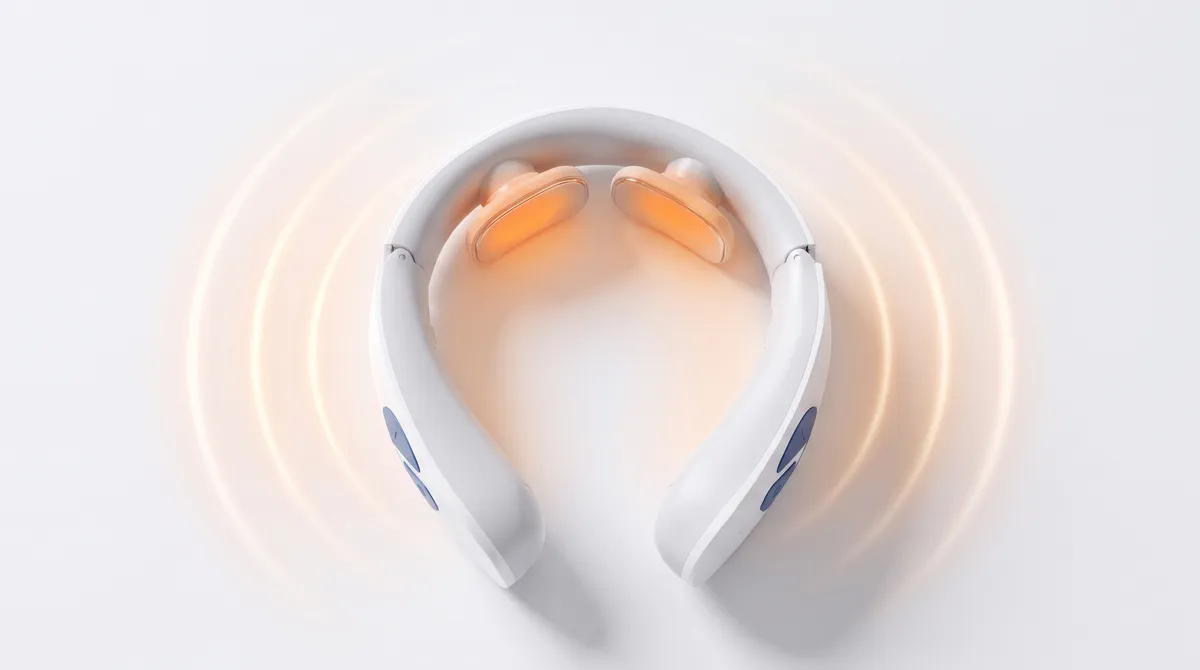
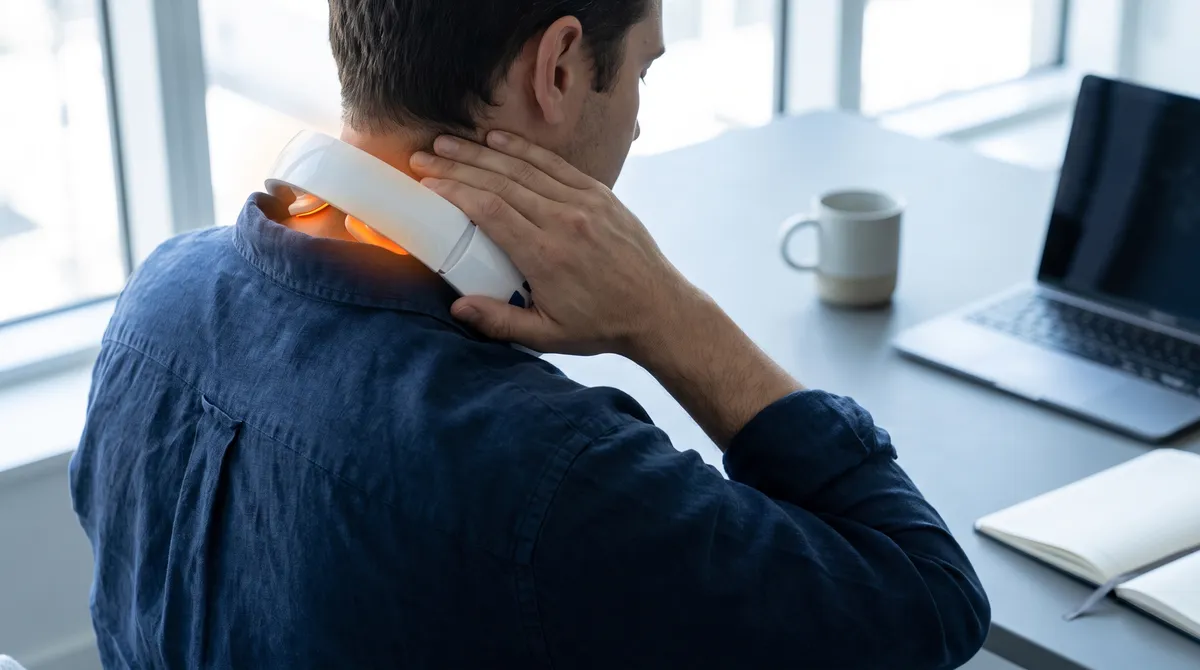
Heat Therapy for the Neck
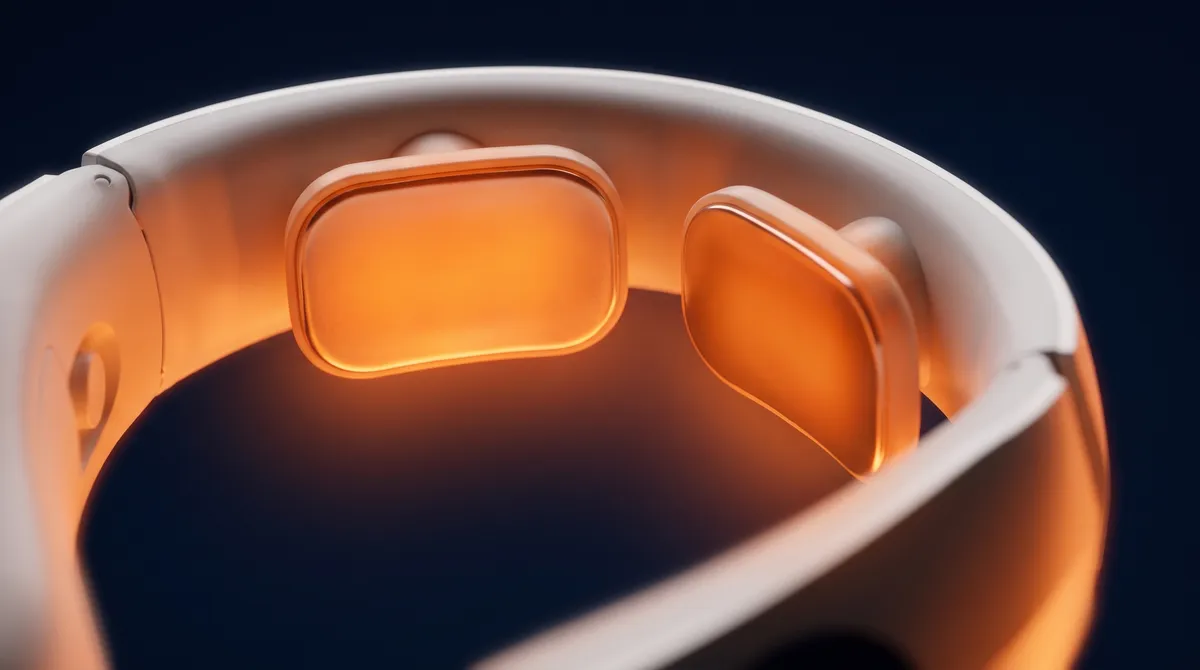
Applied heat raises tissue temperature, which lowers a muscle's resting tension and increases local circulation — a stiff neck physically relaxes under warmth. It's the oldest, best-understood home modality, and it's the first step of every effective neck session.
The mechanism, in one paragraph
Warmth does three measurable things to tense muscle: it dilates local blood vessels (more circulation through tissue that's been held tight all day), it lowers the stretch reflex (the muscle's involuntary "stay clenched" setting relaxes), and it slows incoming sore signals at the sensory level. The canonical practitioner reference is "The physiologic basis and clinical applications of cryotherapy and thermotherapy for the pain practitioner" (Nadler SF, Weingand K, Kruse RJ, Pain Physician, 2004) — written for pain clinicians, and the clearest short explanation of why heat and cold are different tools, not interchangeable ones.
Heat vs cold — the one rule
- Heat for stiffness, tension, and the end-of-day achy-knot feeling. It relaxes.
- Cold for the first 48-72 hours after an acute injury (a knock, a strain). It numbs and limits swelling.
Most desk-tension users reach for the wrong one occasionally — cold on a stiff neck feels briefly nice but does nothing for a muscle that needs to let go. If it's not a fresh injury, it's heat.
Dry heat vs moist heat vs heated devices
| Type | Example | Depth | Session style |
|---|---|---|---|
| Dry surface heat | Electric heating pad | Surface; fades fast | Passive, 20-30 min, no muscle work |
| Moist heat | Warm shower, hot towel, moist pack | Penetrates better than dry | Passive, 10-15 min |
| Heated device + stimulation | Heated EMS collar | Warmth plus contract-and-release | Active, 15 min, dose-controlled |
A heating pad warms you; it doesn't do anything to the muscle. Warmth plus movement is what produces the release — that's why a warm shower plus slow neck rolls beats a heating pad plus TV. A heated EMS unit packages that principle: heat prepares the tissue, the pulses perform the contract-and-release, one 15-minute session, auto-shutoff so you can't doze past the dose.
The 15-level question
Check the exact model's manual for its heat settings and limits. Pulse intensity levels and heat settings are different controls; a listing that says “15 levels” does not establish 15 temperature settings. We are verifying Verta's exact-unit controls with the supplier before publishing a setting count.
How to run a heat-first session
- Heat alone, 3 minutes (level 4-6, whatever feels like a spreading warmth rather than a hot spot) — this is the preparation.
- Add EMS at low intensity, stepping up over two minutes to a firm-but-comfortable pulse.
- 10 minutes, then stop. The auto-shutoff is a feature: falling asleep on heat is how people burn themselves, and every serious device enforces the session length.
- Never use heat over broken skin, and don't combine a heated device with a topical heat cream (IcyHot-style counterirritants) — the effects stack on the skin, not the muscle.
Frequently asked questions
Is heat or ice better for a stiff neck? Heat, unless the stiffness follows a fresh injury within the last couple of days — ice is for acute swelling, heat is for muscular tension. A stiff, knotty neck from desk work wants warmth.
How long should you apply heat to your neck? 10-15 minutes per session. Beyond that you're warming skin, not muscle, and adding burn risk. Devices with auto-shutoff enforce this for you.
Can you sleep with a heated neck massager on? No. Every quality unit auto-shuts after ~15 minutes precisely because sleeping on a heat source is a burn risk. If a device lets you, treat that as a defect, not a feature.
Why does heat feel good on tight muscles? Warmth dilates local blood vessels, lowers the muscle's stretch reflex, and slows sore-signal transmission — the muscle's resting tension drops measurably under applied warmth. It's the best-understood home modality there is.
What temperature should a neck heating device be? There's no single number — skin tolerance varies — which is why adjustable levels matter more than an absolute spec. You want the lowest level that produces spreading warmth in the muscle, then stop there.
See also
Keep reading