Desk Neck Tension
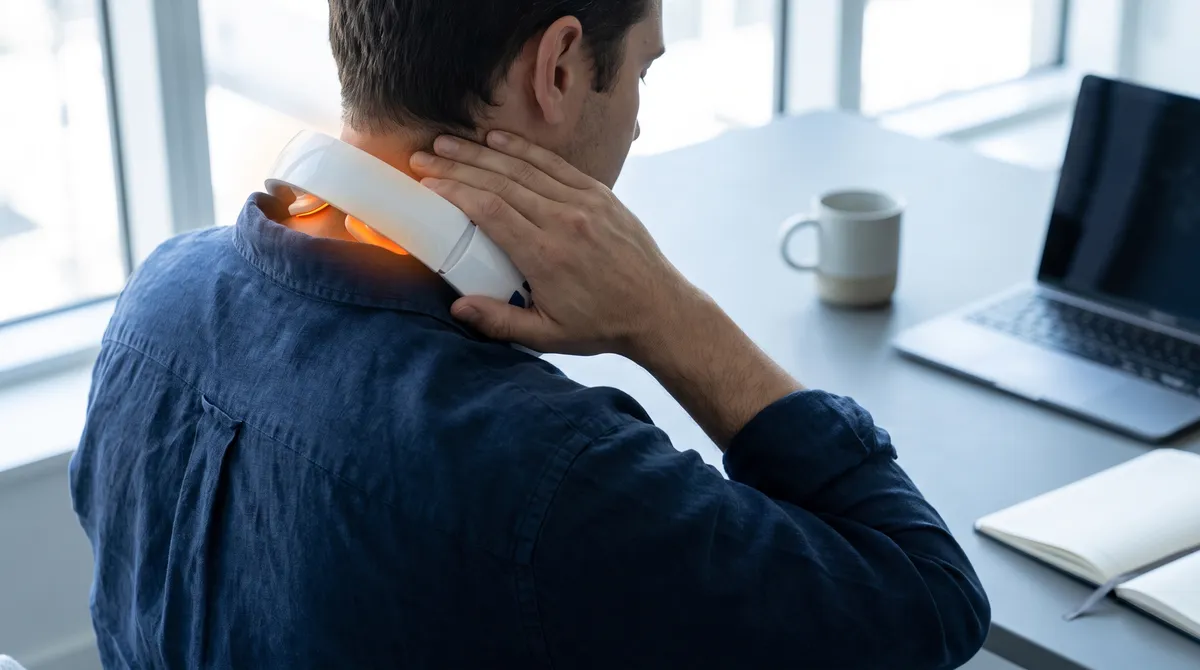
Desk neck tension builds because your head sits forward of your shoulders for hours, loading the muscles at the base of your neck continuously. By mid-afternoon they've been holding a static contraction longer than any workout would ask.
The math nobody shows you
Your head weighs 10-12 pounds. Tilt it forward and the effective load on the cervical muscles climbs steeply — the widely-cited biomechanics paper is "Assessment of stresses in the cervical spine caused by posture and position of the head" (Hansraj KK, Surgical Technology International, 2014), which modeled the load rising from ~10-12 lb upright to the ~40-60 lb range at 45-60° of flexion. Your monitor isn't at eye level, your phone certainly isn't, and your neck muscles pay the difference every hour.
A 30-minute workout at the gym is a known, bounded dose. Eight hours of a 40-lb holding pattern is neither — and it's why "I didn't do anything today but my neck is wrecked" is not a contradiction.
The 4pm pattern
The tension accumulates in the upper trapezius and levator scapulae — the muscles running from skull to shoulder. They fire isometrically (holding, not moving) all day, blood flow through a clenched muscle drops, and waste products pool. The result is the specific end-of-day experience: stiff base of the skull, shoulders creeping toward your ears, that deep knot you can't quite reach.
What actually breaks the pattern
Four levers, in order of evidence strength:
| Lever | What it does | Time cost | Realistic effect |
|---|---|---|---|
| Movement breaks | Re-perfuses the held muscles; resets posture briefly | 2 min/hour | Strongest and free — the boring truth |
| Monitor/keyboard setup | Cuts the load at the source | 30 min, once | High — most desks are 4-6 inches off |
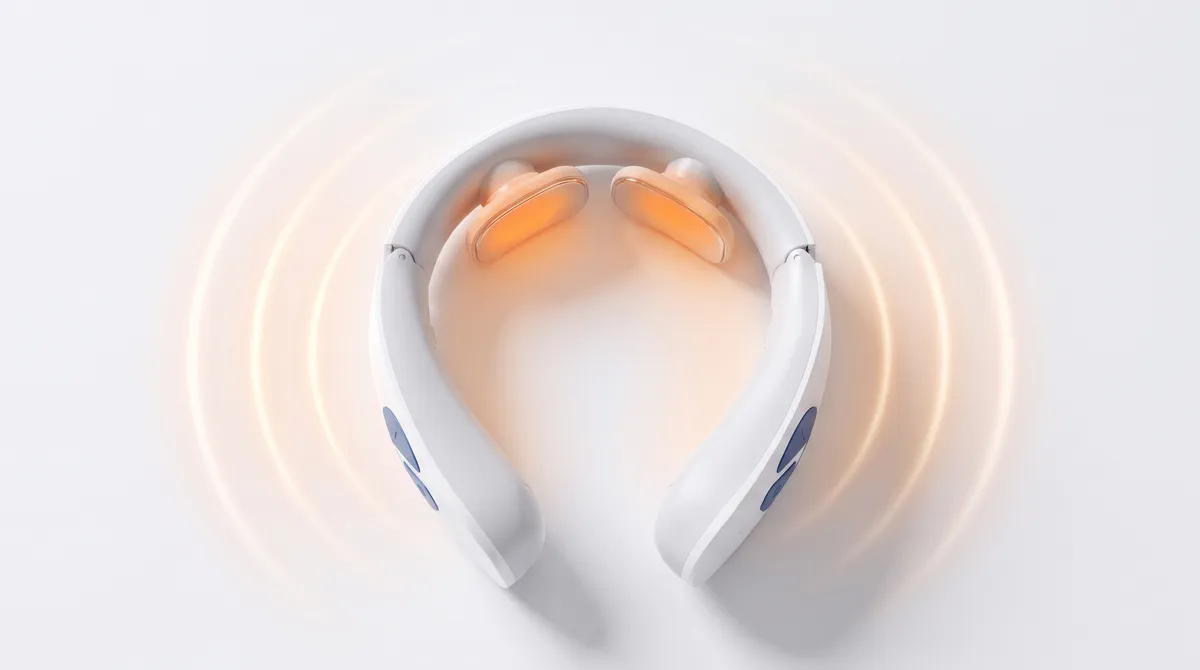
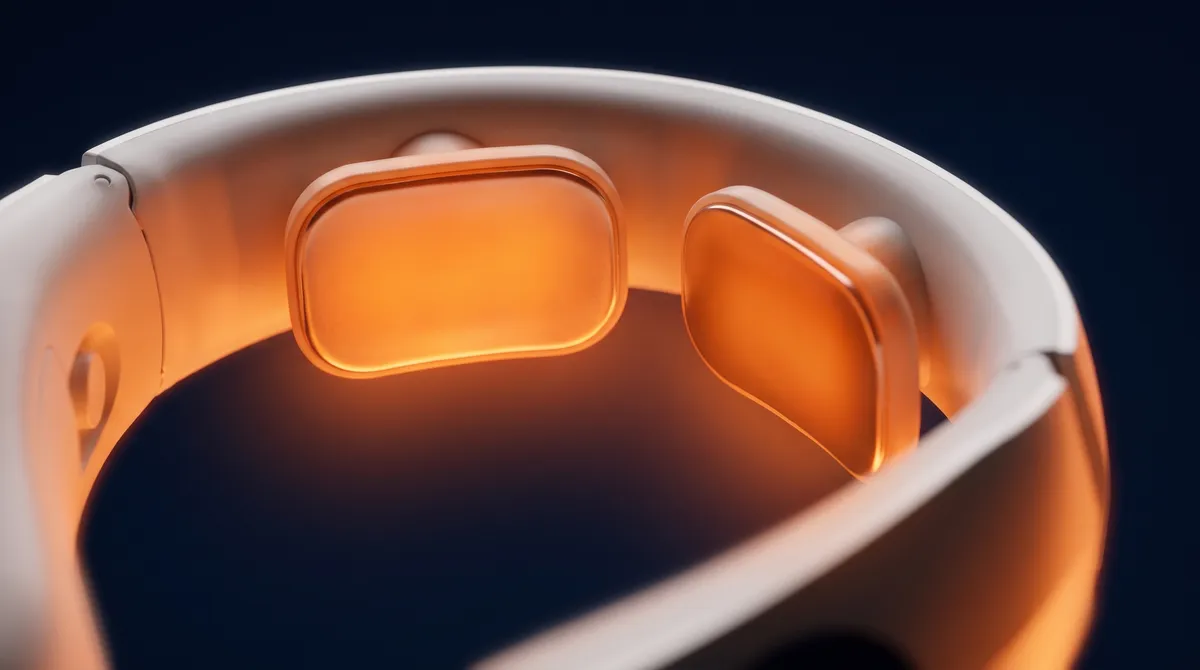
| Heat + EMS session | Contract-and-release cycle the muscle hasn't gotten all day | 15 min | Good — the heated EMS session is a controlled version of this |
| "Posture correctors" | Mostly strap-based reminders | — | Weak — they remind you, they don't release anything |
Notice the massager is fourth on the list, not first. That's deliberate — it's the honest ranking, and it's why the product is positioned as the session you feel, not the thing that "fixes your desk." Movement and setup are the foundations; the 15-minute heat-and-pulse session is what you do at 4pm when the pattern already won today.
The 15-minute end-of-desk protocol
- Hourly (all day): stand, roll shoulders ×5, look over each shoulder ×3. No device needed.
- 4pm: heat on level 5, 3 minutes over the trapezius line.
- EMS 10 minutes, intensity 3 to 5, slow exhales — the pulse does the release your shoulders wouldn't.
- After: 30 seconds of chin tucks (the one exercise that directly counters forward head).
Do that and tomorrow's 4pm starts from a lower baseline. That's the whole strategy — you're not treating anything, you're closing the loop the desk opened.
The UGC angle (why this page exists)
"Desk neck" is one of the most-photographed complaints on the internet — laptop-on-couch setups, travel-day screenshots, 4pm slouch selfies. If you use a massager as part of your desk routine, that's the content we want to see: the setup, the session, the before/after feeling in your own words. Tag us — real desk setups beat staged wellness photography every time.
Frequently asked questions
Why does my neck hurt at my desk every day? Because the head-forward position keeps your neck muscles in a continuous static contraction, which restricts local circulation and accumulates through the day. It's a load-and-duration problem, not a mysterious one.
How do I relieve neck tension after working at a desk? Three things that compose: hourly movement breaks (2 minutes), a monitor raised to eye level, and a 15-minute heat-plus-stimulation session in the late afternoon to actively release what the day held tight.
Is it my monitor height or my posture? Both — monitor height sets the load, posture endurance sets how long you hold it. Fix the monitor first; it's the lever you only have to set once.
Will a neck massager help with desk tension? A heated EMS unit does the contract-and-release cycle the held muscles never got during the day — most people feel the difference in the first session. It doesn't fix the desk; pair it with hourly breaks.
How often should I take breaks from my desk? Roughly every 30-45 minutes, even if it's 30 seconds of standing and shoulder rolls. The goal is re-perfusing held muscles, not a workout.
See also
Keep reading