How Neck Massagers Work
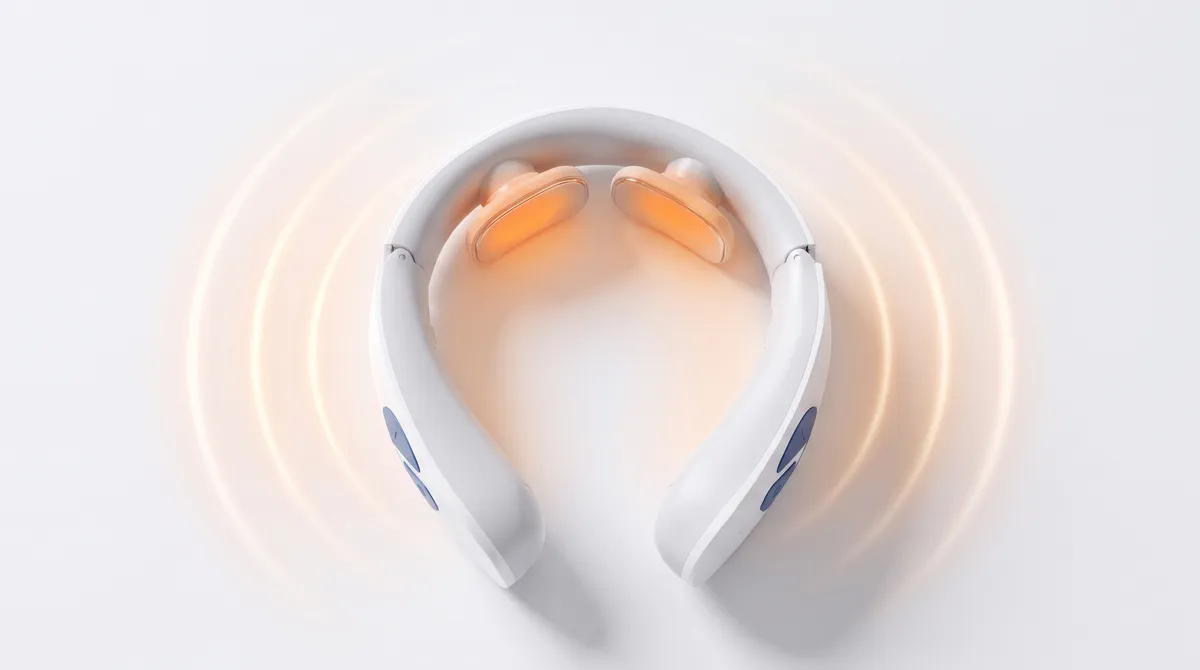
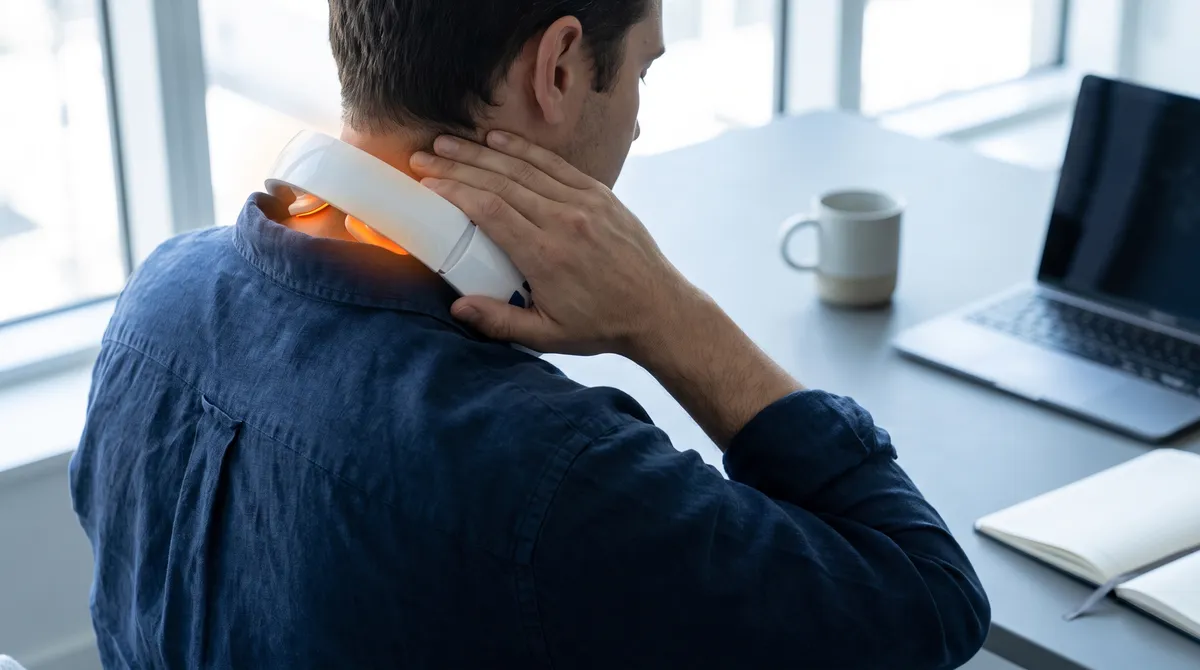
A neck massager relaxes tense neck and shoulder muscles using heat, vibration, or low-frequency electrical pulses. Heated EMS models combine warmth with gentle muscle stimulation so you feel the muscle release within a single 15-minute session.
Most "tired neck" complaints come from the same loop: long desk hours, a forward head position, and muscles that stay switched on until they ache. A massager interrupts the loop mechanically — you don't have to think about relaxing; the device does the work.
The three mechanisms, honestly named
| Mechanism | What it actually does | Best for | Feels like |
|---|---|---|---|
| Heat (thermal) | Warms the muscle tissue and surface circulation, which lowers the muscle's resting tension | Stiff, tight, "knotted" feeling at the base of the neck | Slow, spreading warmth |
| Vibration | High-frequency surface stimulation that occupies the nervous system and dulls the sore signal | Light tension, stress, end-of-day wind-down | Buzzing, tingling |
| EMS (electrical muscle stimulation) | Low-frequency pulses that make the muscle twitch and contract rhythmically, then let go | Deep, stubborn knots; post-workout shoulder tightness | Rhythmic tapping or pulsing under the skin |
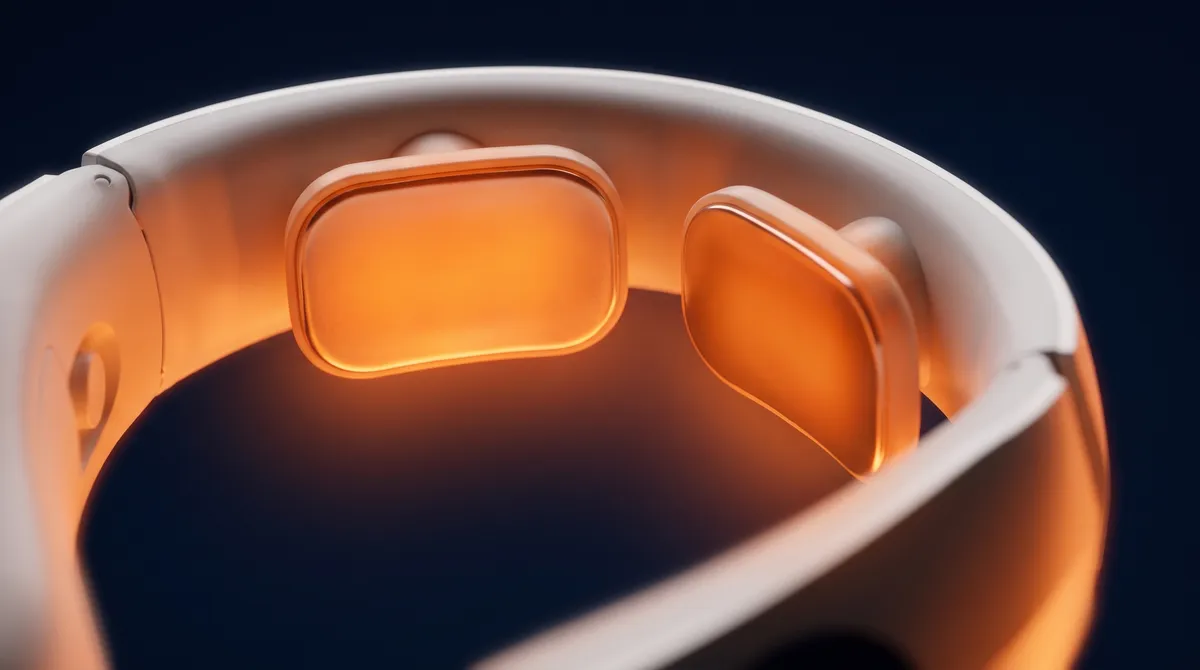
These are not competing technologies — the strongest devices stack them. Heat first (warm the tissue), EMS second (work the muscle under it). That stack is the design behind the Verta heated EMS neck massager.
What "EMS" actually is
EMS stands for electrical muscle stimulation. Small adhesive pads deliver pulses at a frequency (measured in hertz) that cause the target muscle to contract briefly and release. A physiotherapist may use a similar principle in a clinic setting; a consumer unit is simply a lower-power, self-directed version with fixed presets.
Three spec numbers matter when you compare units:
- Modes — how many pulse patterns the unit cycles through. More modes = more variety, not more power.
- Intensity levels — how finely you can step the pulse strength up or down. This is the dose-control dial most cheap units skip.
- Auto session length — a built-in shutoff (typically 15 minutes) so you can't overdo a session by falling asleep with it on.
If a product page doesn't state all three numbers plainly, that's a signal the unit is a one-button gadget. We publish ours on the product page because "you set the dose" is the whole point.
What heat adds
Heat is the older, better-evidenced half of the pair. Applied warmth lowers the stretch reflex of a tense muscle — it literally becomes harder for the muscle to stay clenched. That's why a warm shower helps after a heavy training day and why heating pads outsell every other home modality. The practical rule: heat prepares the muscle, pulses work it. Using both in one session takes about 15 minutes and you feel the difference between "warmed" and "released."
What a neck massager will NOT do
Saying this plainly because most competitors won't:
- It will not cure a medical condition. Tension and soreness from posture and overuse are the honest use case.
- It will not replace a physiotherapist if you have an injury, numbness, radiating symptoms, or pain after an accident — see a professional for those.
- It will not "drain lymph," "slim your face," or "fix posture" while you sleep. If a listing claims any of that, walk away. (We catalogued what the biggest competitors actually claim in our buying guide.)
How to actually use one (the dose protocol)
A session is a dose, like reps at the gym:
- Heat only, 3 minutes at level 4-6 to warm the tissue.
- EMS, 10 minutes, starting at intensity 3 and stepping up until you feel a firm but comfortable pulse. Breathe out slow; don't brace.
- Off. 15-minute auto-shutoff enforces the dose for you.
Once per day for tense days; 3-4 sessions a week for maintenance. More is not better — muscles adapt, and the release you feel in session one is the target, not a warm-up for escalation.
Frequently asked questions
Do neck massagers really work? For muscle tension and soreness from desk work, heat and EMS both have a real mechanism — warmth lowers muscle resting tension and EMS contracts and releases the muscle fibers directly. What they can't do is treat an underlying medical condition, which is why honest brands say "tension relief," not "cure."
How long should you use a neck massager? 15 minutes per session, once daily at most. All quality units have an auto-shutoff; if you need longer, the intensity is probably too low or the problem isn't muscular.
Can you use a neck massager every day? Yes, for muscular tension — daily 15-minute sessions are within the intended use of every consumer EMS unit we've reviewed. Skip days when the neck feels fine.
Is EMS on the neck safe? Consumer EMS units are low-power and widely used, but the neck is close to the carotid arteries and the front of the throat. Follow the placement guide (sides and back of the neck/shoulder line, never the front), start at low intensity, and don't use one at all if you have a pacemaker, are pregnant, or have an implanted electronic device.
Why does my neck feel tighter after a massage? Usually the intensity was too high and the muscle braced against it. Drop two levels, add heat first, and shorten the session. A release should feel like the muscle letting go, not like a workout.
Do I need a doctor's approval? For ordinary desk-tension in a healthy adult, no. If you have any cardiovascular condition, implanted electronics, recent neck injury, or you're pregnant — ask first.
See also
Keep reading