Cervical Traction vs Neck Massage

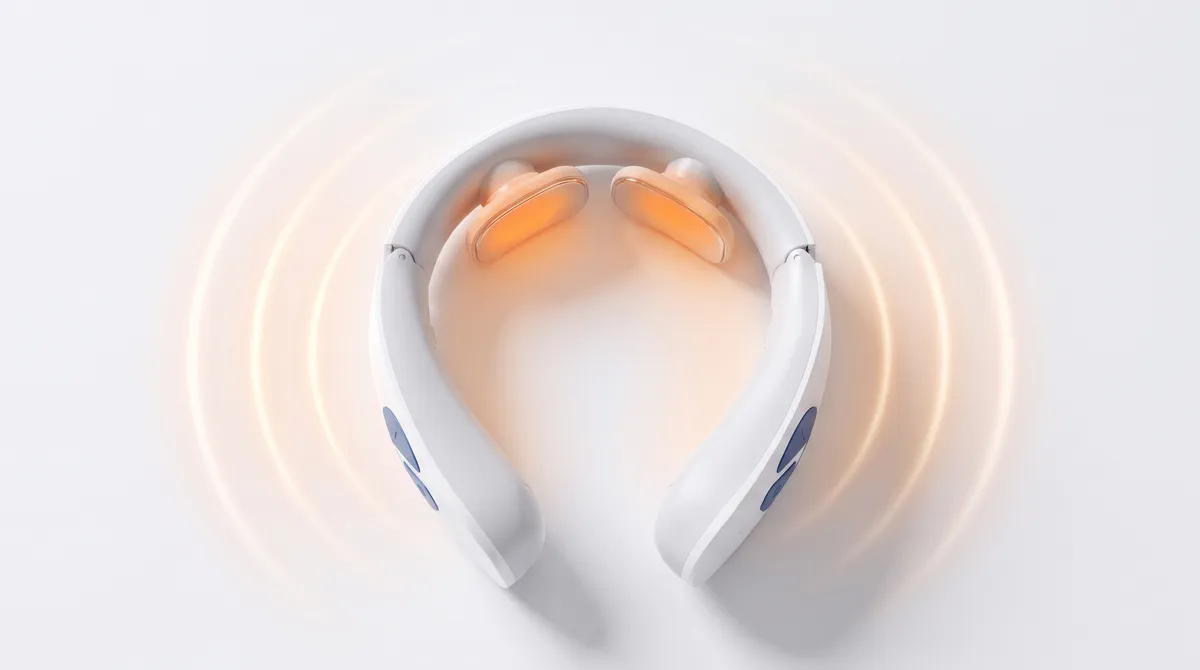
Traction pulls — it stretches the neck's spaces apart. Massage works — it contracts and releases the muscles. For desk-tension in healthy adults, muscle work (heat + EMS) is the everyday tool; traction is a specific, more clinical intervention.
"Cervical neck traction device" is one of the highest-intent searches in this category — people arrive there after a long day of a stiff neck and want the thing that will fix it. This page exists so you buy the right category, not the most dramatic one.
What each actually does
| Traction | Massage / EMS | |
|---|---|---|
| Action | Sustained longitudinal pull on the cervical spine | Mechanical work on muscle tissue (kneading, vibration, or pulse-driven contract-release) |
| Target | Joint spaces, disc height, stretched soft tissue | The muscles themselves |
| Feels like | Decompression — a stretched, pulled sensation | Warmth and rhythmic muscle work |
| Session | 10-20 min, usually lying down | 15 min, seated, hands-free |
| Home devices | Inflatable collars, over-door pulleys, hammock-style | Collar massagers, pads, handhelds |
| Best for | Specific, clinician-directed programs | Everyday muscular tension and stiffness |
The honest evidence picture
Cervical traction's evidence base is weaker than its search volume suggests. The major conservative-care evidence base — the Cochrane work on mechanical neck disorders (Gross AR, et al., multiple Cochrane systematic reviews summarizing conservative management) — has repeatedly found that passive modalities in isolation, traction included, show limited and inconsistent benefit, while exercise-based approaches carry the stronger signal. Traction still has a real place, but it's usually a supervised, program-specific one (post-injury, clinician-prescribed), not a default consumer purchase.
We're not telling you traction is useless — we're telling you it's the wrong first buy for what most searchers actually have, which is eight hours of desk-induced muscle holding.
The decision tree
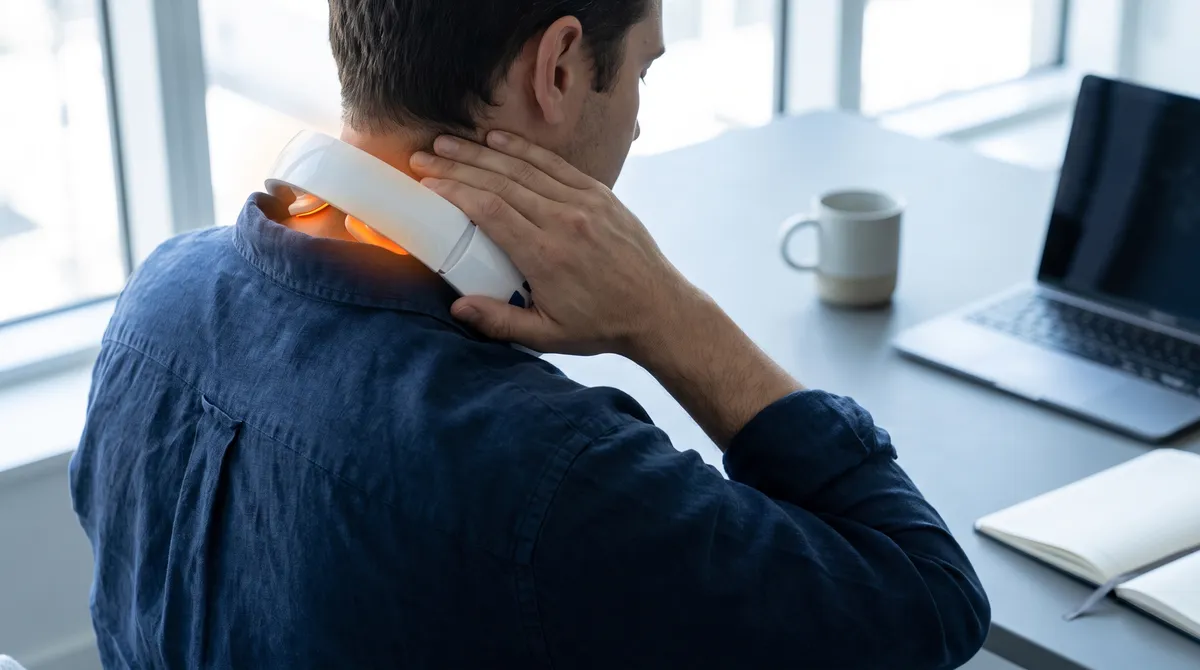
Choose muscle work (heat + EMS massage) if: - Your neck is stiff and knotty by late afternoon, worse on desk days - It's muscular-feeling: sore to press, loosens with warmth and movement - You want a daily-maintenance tool, not a treatment program - You're a healthy adult with no injury history — this is the heated EMS session
Consider traction (ideally after a professional consult) if: - A clinician has specifically prescribed or recommended cervical traction - Your program is post-injury or post-flare rehabilitation with defined parameters - You understand the session limits (time, force) and who told you to use it
See a professional before either if: numbness or tingling into the arms, symptoms after an accident, or anything that feels neurological rather than muscular. A massager and a traction collar are both the wrong first purchase for that list — the right first purchase is an appointment.
Why we don't sell traction (and don't plan to)
Traction force is the one parameter home users consistently get wrong — too much pull, too long, in the wrong position. Muscle stimulation's failure mode at worst is "intensity too high, you turn it down." We'll stay in the category where the dose is self-evident and the device enforces it.
Frequently asked questions
Do cervical traction devices work? For clinician-directed programs, sometimes — the systematic review base finds passive interventions including traction show limited, inconsistent benefit for mechanical neck complaints, with exercise-based care carrying the stronger signal. As a default consumer purchase for desk tension, muscle work is the better first tool.
Is a neck traction device safe to use at home? Inflatable and hammock-style units are widely sold, but force and duration are easy to get wrong, and they're not appropriate with certain conditions. If you weren't shown how to use one by a professional, a dose-controlled heat + EMS session is the lower-risk everyday option.
Which is better for a stiff neck — traction or massage? For stiffness that's muscular in origin — sore to the touch, worse in the evening, loosens with warmth — massage-style muscle work (heat plus EMS) is the better match. Traction addresses joint-space loading, which isn't the desk-tension mechanism.
Can I use both? They're different categories, not a stack — traction is a specific stretching protocol, massage/EMS is muscle work. If you're in a supervised traction program, ask your clinician before adding any other neck device.
Why does my neck feel worse after traction? Commonly: too much force, too long a hold, or a muscular problem being treated with a joint-space tool. Muscular desk tension is why the muscle-work category exists — start there.
See also
Keep reading